Okay, so check this out—blockchain explorers feel like the binoculars of crypto. Whoa! They let you zoom into transactions, wallets, and program logs without begging for trust. For Solana users this matters a lot because the chain moves fast and you need clear tracks, not smoke. Initially I thought an explorer was just a lookup tool, but then I realized it’s also a forensic kit and a dashboard for decisions.
Seriously? Transaction hashes alone don’t cut it anymore. Medium-level summaries help. Longtime observers want context, patterns, and a way to answer “who sent what” quickly and reliably, though the reality is messier when you peel back layers. My instinct said the UX would be the main battleground, but actually the analytics and alerting features are where explorers win or lose.
Here’s the thing. Not all explorers are built the same. Wow! Some focus on raw data export, some on charts, and some on tracing token flows with visual graphs. The choice depends on whether you’re a trader, researcher, developer, or just curious about receipts. On one hand a developer wants RPC-friendly endpoints; on the other hand a trader wants clear mempool-ish signals and on-chain metrics to act fast.
There’s a tradeoff between speed and depth. Hmm… Speed can mean simplified displays and fewer historical layers. Medium displays help most users. But deep analytics require indexing, historical state reconstruction, and careful handling of forks and reorgs—which Solana has handled differently than other chains, and that affects explorer design. The longer pipelines that produce aggregated metrics must reconcile performance with correctness, and that’s not trivial.

What to look for in a Solana explorer
Start with reliability. Really. Short downtimes or stale data ruin trust fast. Some explorers prioritize caching to keep pages snappy, while others query nodes live for up-to-the-second accuracy. Both approaches have pros and cons. If you need forensic detail you might prefer a tool that indexes everything and retains historical state, though it may be a hair slower on the UI under load.
Next: tracing and token flow visualization. Wow! It’s amazing how much clearer a Sankey-style flow makes a messy token hop appear. Medium-level visuals show movement without drowning the viewer in hex. Analysts love that. And if the explorer provides raw export (CSV, JSON), then automated workflows become possible, which matters for teams that run compliance or market surveillance.
Then consider developer tooling. Short docs are helpful. Examples are better. Longer explanations of RPC usage, rate limits, and caching strategy save time. Many devs hit rate limits unexpectedly and then blame their own code. Not fun. So look for explorers that publish clear API docs, sample requests, and status endpoints.
When analytics matter more than scanning
I’m biased, but analytics change how you act on chain data. Small indicators like unusual account rent changes, sudden program upgrade patterns, or large memo spikes can signal coordinted activity. Really? Yes, and missing these can lead to bad bets. Medium dashboards with alerting give you that edge.
On the flip side, raw transaction tracing can exonerate or implicate wallets during disputes. Short snapshots sometimes mislead; longer reconstructions reveal chain-level causes. Analysts need both micro and macro views. The complexity grows when tokens pass through multiple spl-token bridges or wrapped assets, since disentangling wrapped flows requires token-metadata joins and sometimes external price feeds.
Checkpoints and integrity proofs are underrated. Hmm… A robust explorer will surface the slot confirmations and cluster health, and also explain how they attained a given balance snapshot. Longer explanations help auditors and compliance teams understand whether a reported balance was taken pre- or post-reorg. If you’re running audits you should ask for reproducible queries, not just pretty charts.
Solscan and where it fits
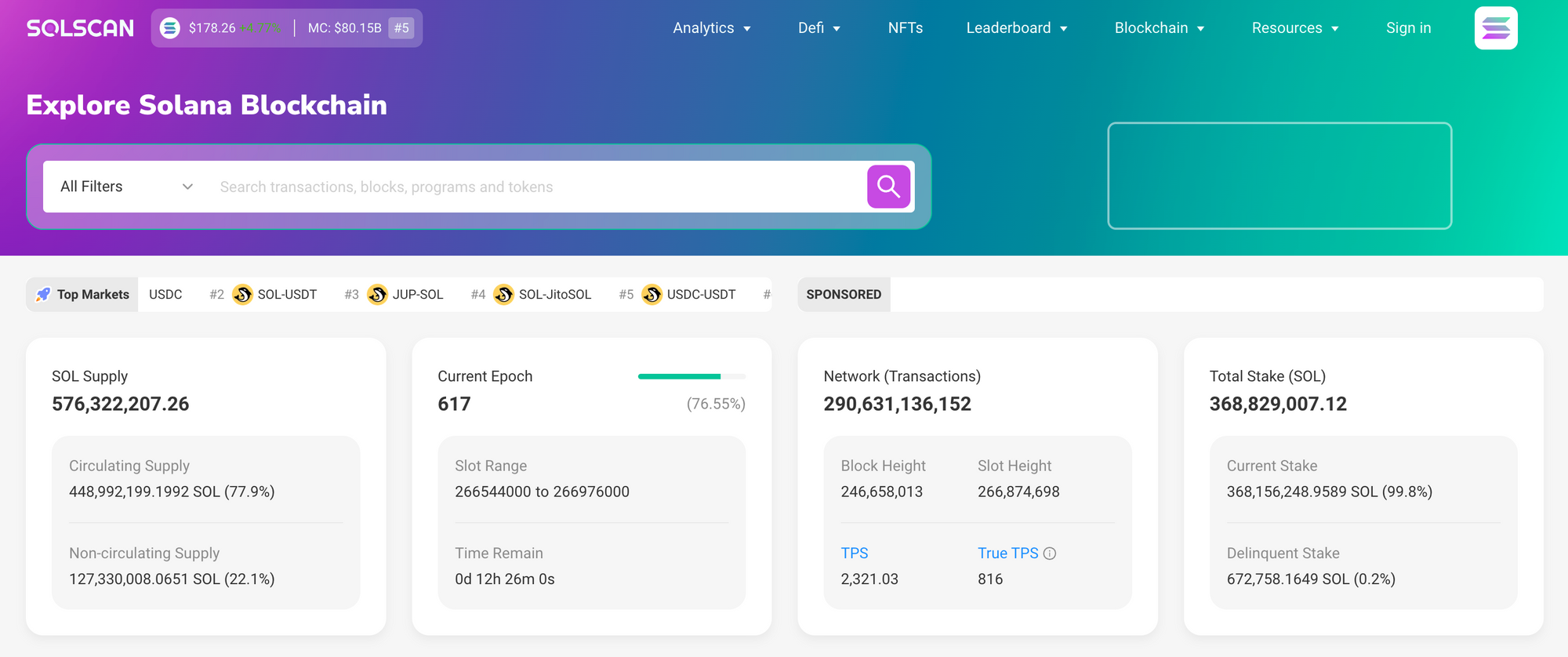
Many users point to Solscan as a go-to when they want a balance between usability and depth. Wow! It shows transactions, token holders, program interactions, and some analytics without being overwhelming. The layout is familiar, which lowers the learning curve. For those wanting to dig deeper and follow token flows casually, Solscan often hits the sweet spot.
For a direct link to a widely referenced entry point, see https://sites.google.com/cryptowalletextensionus.com/solscan-explorer-official-site/. Medium users find the quick search bar valuable, while advanced users appreciate export options and the tabbed detail panes for instructions, logs, and events. Though, somethin’ about UI clutter can bug long-time power users—there’s always tradeoffs.
Pro tip: pair explorers with on-chain indexers for complex queries. Simple UI lookups work fine for single txn checks. But if you’re tracking hundreds of wallets or trying to reconstruct a rug-pull chain, export and analyze with a local tool or cloud notebook. Longer-term projects often require replicated indexes and watchlists.
Common questions
How accurate are explorer balances?
Short answer: usually accurate. Really. But balance snapshots depend on slot confirmations and how the explorer indexes historical state. Medium-term discrepancies happen if an explorer lags or if a reorg has been ignored. Analysts should check slot numbers and confirm with multiple sources when stakes are high.
Can I use explorers for compliance or forensic work?
Yes, with care. Woah—simple lookups won’t cut it for legal or regulatory work. You need reproducible queries, documented indexing strategies, and sometimes signed attestations of data integrity. Longer investigations will combine on-chain evidence with off-chain context (KYC, exchange deposits, IP logs) where available.
Okay, real talk—explorers are tools, not truths. Hmm… Treat them as lenses with specific filters. Some lenses are clean and wide-angle, others are telephoto and precise. Use the right one for the job. I’m not 100% sure which explorer will be the long-term favorite—but right now, a mix of fast UI, solid API, and exportable data wins most use cases.
Final thought: don’t trust a single view. Look at multiple explorers for contentious cases. Short checks first. Then deeper dives if needed. And remember—data alone rarely tells the whole story. Context matters, patterns matter, and sometimes your gut will spot somethin’ odd long before the numbers fully explain it…
-

-

-

-

-

-

-

-

-

-